


The Innovate to Elevate Forum in Medical Care in Health Professions is a pioneering academic platform hosted by Batterjee Medical College. The forum brings together healthcare leaders, clinicians, researchers, innovators, and decision-makers to examine how innovation can be translated into meaningful impact within medical care. It provides a collaborative space to explore emerging technologies, advances in knowledge, and evidence-based practices aimed at enhancing patient outcomes, professional performance, and healthcare system effectiveness.
This forum reflects Batterjee Medical College’s commitment to advancing high-quality, compassionate, and future-ready healthcare. It offers an open environment for scientific dialogue on contemporary challenges in medical care and innovative multidisciplinary solutions. Through scientific sessions, oral presentations, workshops, and research exchanges, the forum fosters collaboration, strengthens the culture of innovation, and supports the continuous elevation of healthcare practice across local and regional healthcare institutions.
Vision
To be a reference in creating future innovation to enhance medical care by empowering healthcare systems to be smarter and more sustainable.
Mission
To create medical care connecting innovators in healthcare professions to elevate patient recovery and healthcare quality.
Target Audience
This forum is designed for healthcare leaders, clinicians, innovators, and professionals committed to transforming medical care. It brings together decision-makers, researchers, digital health experts, and frontline providers to explore how innovation can elevate healthcare quality, safety, and patient outcomes.

Precision Medicine & Molecular Innovation
To highlight advancements in genetic science and molecular technologies that drive personalized, precise, and early‑intervention medical care.

Digital Healthcare and Transformation
To explore and promote the integration of digital tools and intelligent systems that enhance accessibility, efficiency, and patient‑centered healthcare delivery.

Healthcare Systems Leadership & Management
To strengthen modern health system leadership and operational strategies that support sustainable, resilient, and high‑quality care models.

Advanced Therapeutics & Clinical Practice
To highlight new treatment modalities, clinical protocols, and innovations that directly impact patient care.
Batterjee Medical College-Dammam Research Units, in collaboration with the BMC Student Welfare Unit, and Student Academic Affairs.
Auditorium: Batterjee Medical College | Chairperson: Dr. Ahmed Desoky (Professor of Physiology, Coordinator of General Medicine Program)
| Time | Speaker | Title / Activity |
|---|---|---|
| 9:00 - 9:50 | - | Registration |
| 9:30 - 9:40 | Dr. Shahad Hafez | Welcoming Message |
| 9:40 - 9:50 | Dr. Heba Alhamal | Opening Remarks |
| 10:00 - 10:25 | Dr. Said Al-Jaroudi Head of Innovation & Technology at Saudi Aramco |
Fostering Young Professionals' Innovation Mindset |
| 10:25 - 10:50 | Professor Abbas Al Mutair Ph.D. in Medicine, Director of the Research Center, Almoosa Health Group |
Leading Change Through Multidisciplinary Research and Innovation in Healthcare |
| 10:50 - 11:15 | Dr. Reem Aldossry Ph.D. in Nursing, Head of Nursing program, BMC Dammam |
Leading Change Through Multidisciplinary Research and Innovation in Healthcare |
| 11:15 - 11:40 | Dr. Jenan Al-Matouq Ph.D. in Biomedical Sciences, King Faisal Specialist Hospital & Research Centre |
Advancing Cancer Discovery Through Integrated Multi-Omic Innovations |
| 11:40 - 12:40 | Break | Pray Time & Refreshments |
| 12:40 - 1:05 | Dr. Khalid Alharkan | Innovate to Heal |
| 1:05 - 1:30 | Dr. Ali Alraban | - |
| 1:30 - 2:55 | Dr. Abdulmonen Alsaleh | - |

Dr. Said Al-Jaroudi
Ph.D. in Chemistry | Head of Innovation & Technology, Saudi Aramco
Fostering Young Professionals Innovation Mindset
Professional Summary
Said Al-Jaroudi is a Lab Supervisor and expert in innovation and patents, with an impressive portfolio of 16 US granted patents to his name. Currently, he is working with Innovation & Technology at Saudi Aramco, where he plays an essential role in leading the enterprise-wide innovation strategy, governance, and deployment. Dr. Said is committed to driving innovation and technological advancements in his field. His expertise and leadership have been instrumental in shaping the innovation landscape at Saudi Aramco, and his contributions have had a significant impact on the organization's growth and success. He has published more than 30 scientific papers in reputable peer-reviewed journals, demonstrating his commitment to advancing knowledge and sharing his expertise with the scientific community. He is strongly committed to community and cultural development, aiming to make a meaningful societal impact.
Abstract
The presentation focuses on fostering an innovation mindset among young professionals, emphasizing the importance of learning, unlearning, and relearning to drive meaningful change. It explores the concept and types of innovation, including incremental, radical, and transformational, with real-world examples. The session highlights the criteria for innovative ideas, novelty, problem-solving, and value creation, while showcasing a success story involving a gold compound as a promising anticancer drug. The event outlines a structured path forward, encouraging participants to embrace innovation as a foundational approach in their professional journey.
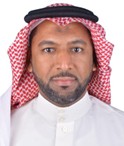
Professor Abbas Al Mutair
Ph.D. in Medicine | Director of the Research Center and Chairman of the IRB, Almoosa Health Group
Leading change through Multidisciplinary Research and Innovation in Healthcare
Professional Summary
Professor Abbas Al‑Mutair is a highly respected academician, senior researcher, and healthcare leader with more than 20 years of combined clinical, academic, and research experience. He currently serves as the Director of the Research Center and Chairman of the Institutional Review Board (IRB) at Almoosa Health Group, where he leads research strategy, ethical oversight, and institutional governance. He previously held the same leadership roles at Dr. Sulaiman Al Habib Medical Group in Riyadh, contributing significantly to strengthening research systems and regulatory compliance. His research interests include critical care medicine, infectious diseases, epidemiology and public health, medical education and postgraduate training, real‑world data and evidence, and cultural aspects of healthcare research. Professor Al‑Mutair has authored and co‑authored more than 230 peer‑reviewed articles, in addition to books and book chapters published in high‑impact international journals. He is the Founder and former Editor‑in‑Chief of the Saudi Critical Care Journal and currently serves as Editor‑in‑Chief, Academic Editor, and Associate Editor for several reputable international journals, while actively participating as a reviewer and editorial board member worldwide.
Abstract
The modern healthcare system faces challenges and addressing them by visionary leadership roles and commitments of a multidisciplinary research and innovations team is indispensable. The presentation explored how multidisciplinary innovations in healthcare improved efficiency, safety, and patient outcomes. Among the multiple real-world scenarios, one example of multidisciplinary collaboration is the Antimicrobial Stewardship model, which involves physicians, pharmacists, and microbiologists. In addition, personalized medications are managed by a team of medical specialists, bioinformaticians, clinical experts, and support staff. Most healthcare organizations have already implemented IoT, managed by software developers, biomedical engineers, and clinicians. The continuous dedication of joint efforts has led to advancements in Nanomedicine, 3D printing, and artificial intelligence. Multidisciplinary collaboration through sustained leadership is essential for healthcare innovation. It brings together diverse expertise and novel applications from multiple disciplines to develop high-quality healthcare systems prepared for future demands.

Dr. Reem AL-Dossary
Ph.D. in Nursing | Assistant Professor at Imam Abdulrahman Bin Faisal University | Head of Nursing Program at BMC-Dammam
The perception of the impact of smart infusion pumps on nurses’ medication administration performance: A study in Saudi Arabia hospitals
Professional Summary
Dr. Reem Al‑Dossary is an accomplished nursing academic and leader with extensive experience in education, administration, and professional regulation. She is licensed as a registered nurse in Virginia, USA, and is a certified nursing consultant with the Saudi Commission for Health Specialties. She has worked as an adjunct faculty member at George Mason University. Currently, she is an Assistant Professor at Imam Abdulrahman Bin Faisal University and serves as Vice Dean of Academic Affairs and Head of the Nursing Program at Batterjee Medical College- Dammam. Her professional leadership roles include Chair of the Nursing Management and Leadership Unit for the Saudi Nursing Licensure Exam, Chair of Public Relations at the Saudi Nursing Society, and Head of the Nursing Program. Dr. Al‑Dossary is an active member of Sigma Theta Tau International Nursing Honor Society and the Virginia League for Nursing. She has an extensive publication record, including peer‑reviewed journal articles, book chapters, and a book on leadership and clinical decision‑making. Her contributions have been recognized through multiple speaking engagements, academic accreditation qualifications, and her inclusion in Stanford’s Top 2% Scientists list for 2024.
Abstract
Smart infusion pumps are widely used to enhance medication safety; however, their effectiveness depends on nurses’ perceptions, usability, and integration into clinical workflows. This study examined nurses’ perceptions of smart infusion pumps and their impact on medication administration performance in Saudi Arabian hospitals. A cross‑sectional survey was conducted among 249 registered nurses from nine hospitals using a validated questionnaire assessing learnability, memorability, efficiency, error management, and medication administration performance. Most nurses reported daily use of smart pumps (76.8%). Learnability and memorability were significantly higher among younger nurses, diploma holders, and those working in the Central Region (p < 0.05). Perceived efficiency differed by gender (p = 0.041), while error management perceptions varied by gender and region (p < 0.05). No significant differences were observed in medication administration performance across demographic groups (p > 0.05). Overall, nurses reported positive perceptions of smart infusion pumps; however, regional and demographic variations indicate the need for standardized training and stronger system‑level support to optimize safe medication administration.

Dr. Jenan Al-Matouq
Ph.D. in Biomedical Sciences | King Faisal Specialist Hospital & Research Centre | Adjunct Assistant Professor at Alfaisal University
Advancing Cancer Discovery Through Integrated Multi-Omic Innovations
Professional Summary
Dr. Jenan Al-Matouq, currently a King Faisal Specialist Hospital & Research Centre and an adjunct Assistant Professor at Alfaisal University in Riyadh. She is an accomplished academic and researcher in the field of biomedical sciences. Dr. Al-Matouq is an Assistant Professor with over a decade of experience in higher education, biomedical research, and academic leadership. Her research focuses on cancer biology, with expertise in molecular mechanisms of oncogenesis, multi-omics approaches, and translational cancer research. She has authored numerous peer-reviewed publications in high-impact journals, contributing to advancements in areas such as cancer therapeutics, microbiome research, and molecular diagnostics. Dr. Al-Matouq has held key leadership roles, including Vice Dean for Academic Affairs, where she led curriculum innovation, established multidisciplinary educational initiatives, and promoted evidence-based academic practices. She is also actively involved in research governance and has chaired institutional review boards, reflecting her commitment to ethical and impactful research.
Abstract
Cancer complexity requires approaches that go beyond single-omic analyses. Transcriptional regulation plays a central role in oncogenesis, shaping gene expression, tumor progression, and therapeutic response. When integrated with translational insights, it reveals how mRNA dynamics influence protein synthesis and cellular behavior within the tumor microenvironment. Proteomics further captures the functional outcomes of these processes through protein interactions and modifications, while the microbiome adds an additional layer by influencing tumor development, immune responses, and treatment efficacy. This seminar highlights the integration of genomics, transcriptomics, proteomics, and microbiomics to provide a comprehensive view of cancer biology. By connecting these layers, we emphasize the potential of multi-omic approaches to uncover complex molecular mechanisms and advance personalized cancer therapies.
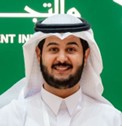
Dr. Khalid Saleh Alharkan
Ph.D. in Medicine | Associate Professor of Family and Geriatric Medicine at Imam Abdulrahman Bin Faisal University | Head of Medicine Program at BMC-Dammam
Innovate to Heal
Professional Summary
Dr. Khalid AlHarkan is an Associate Professor of Family and Geriatric Medicine and a U.S. board‑certified Family and Geriatric physician who combines academic leadership, clinical excellence, and health system innovation. He currently serves as a Consultant Physician and Head of the Medicine Program at BMC Dammam, while also leading national efforts to advance older‑adult care as President of the Saudi Geriatric Society. His education and training span clinical medicine, healthcare management, and innovation, reinforced by residency and fellowship training at Texas Tech Health Science Center and the University of Texas in Houston, along with a research fellowship at George Washington University. This diverse background underpins his strong focus on evidence‑based practice, quality improvement, care coordination, and the translation of research and innovation into sustainable, patient‑centered healthcare outcomes.
Abstract
In conference discussions such as “Innovate to Elevate”, the presentation focuses on the practical implementation of innovation that directly improves patient outcomes and experiences. It brings a systems and innovation perspective to healthcare, with particular emphasis on “Innovation in Digital Health, Prevention, and Longevity”. It highlights how digital health tools—when thoughtfully designed and responsibly adopted—can enhance access, support clinical decision-making, improve continuity of care, and enable proactive management of chronic conditions common in geriatric populations.
| Time | Venue | Speaker | Title |
|---|---|---|---|
| 11:00 - 11:40 | Multipurpose Hall (1) | Dr. Sara Rizk (Asst. Professor) Dr. Sara Ragab (Assoc. Professor) |
Tailored Therapies: The Genomic Revolution in Medicine |
| 12:40 - 1:20 | Multipurpose Hall (2) | Dr. Shimaa Ramadan Dr. Esraa Ebrahim (Asst. Professor) |
AI in Medicine: From Buzzword to Bedside |
| 11:50 - 11:40 | Multipurpose Hall (1) | Dr. Ayat AL Sawaad (Asst. Director of Nursing) Ms. Nadaa Al Shaif (Magnet Manager Nurse) |
Telehealth: Translating Evidence into Effective Practice. |
| 12:40 - 1:20 | Multipurpose Hall (2) | Dr. Alsayed Bakr (Quality Supervisor) Dr. Esraa Ahmed (Assoc. Professor) |
Food for Medicine: Eating Smart for a Healthy Life The Secret World Within: How the Microbiome is shaping our Future |
Workshop Speakers Details
Dr. Sara Rizk & Dr. Sarah Ragab
Dr. Sara Rizk: Assistant Professor of Medical Biochemistry and Molecular Biology
Dr. Sarah Ragab: Associate Professor of Medical Biochemistry
Abstract:
Advances in genomic science have transformed our understanding of disease mechanisms and therapeutic responses, paving the way for a new era of precision medicine. Genomics-guided therapy enables clinicians to tailor treatments based on an individual’s genetic profile, improving efficacy, minimizing adverse effects, and optimizing patient outcomes.
Dr. Shaimaa Ramadan & Dr. Esraa Ebrahim
Dr. Shaimaa Ramadan: Assistant Professor of Anatomy and Embryology, FAIMER Fellow (2021)...
Dr. Esraa Ebrahim: Assistant Professor of Medical Physiology, General Medicine Practice program...
Abstract:
Artificial Intelligence (AI) is rapidly transforming healthcare, yet many educators and clinicians remain uncertain about how to integrate it into practice and teaching meaningfully. While AI is often discussed as a disruptive innovation, there remains a gap between theoretical understanding and practical application in bedside care and medical education. This interactive workshop aims to bridge that gap by translating AI from a conceptual “buzzword” into a practical clinical and educational tool.
Dr. Ayat AL Sawaad & Ms. Nadaa Al shaif
Dr. Ayat AL Sawaad: Ph.D. in Nursing, Assistant Director of Nursing for Research and Evidence-Based Practice...
Ms. Nadaa Al shaif: Magnet Manger Nurse at King Fahad University Hospital...
Abstract:
[Content pending/Not provided in abstract section]
Prof. Alsayed Hamed Ali Bakr & Dr. Esraa Ahmed
Prof. Alsayed Hamed Ali Bakr: Quality Supervisor, Department of Quality & Development...
Dr. Esraa Ahmed: Associate Professor of Medical Microbiology and Immunology...
Abstracts:
Nutrition: Nutrition plays a fundamental role in maintaining human health and overall well-being. A balanced diet provides essential nutrients such as proteins, carbohydrates...
Microbiome: The human microbiome, a complex ecosystem of trillions of microorganisms residing in and on our bodies, plays a pivotal role in health and disease...
Information about posters will be updated soon.

